
Start with your plans
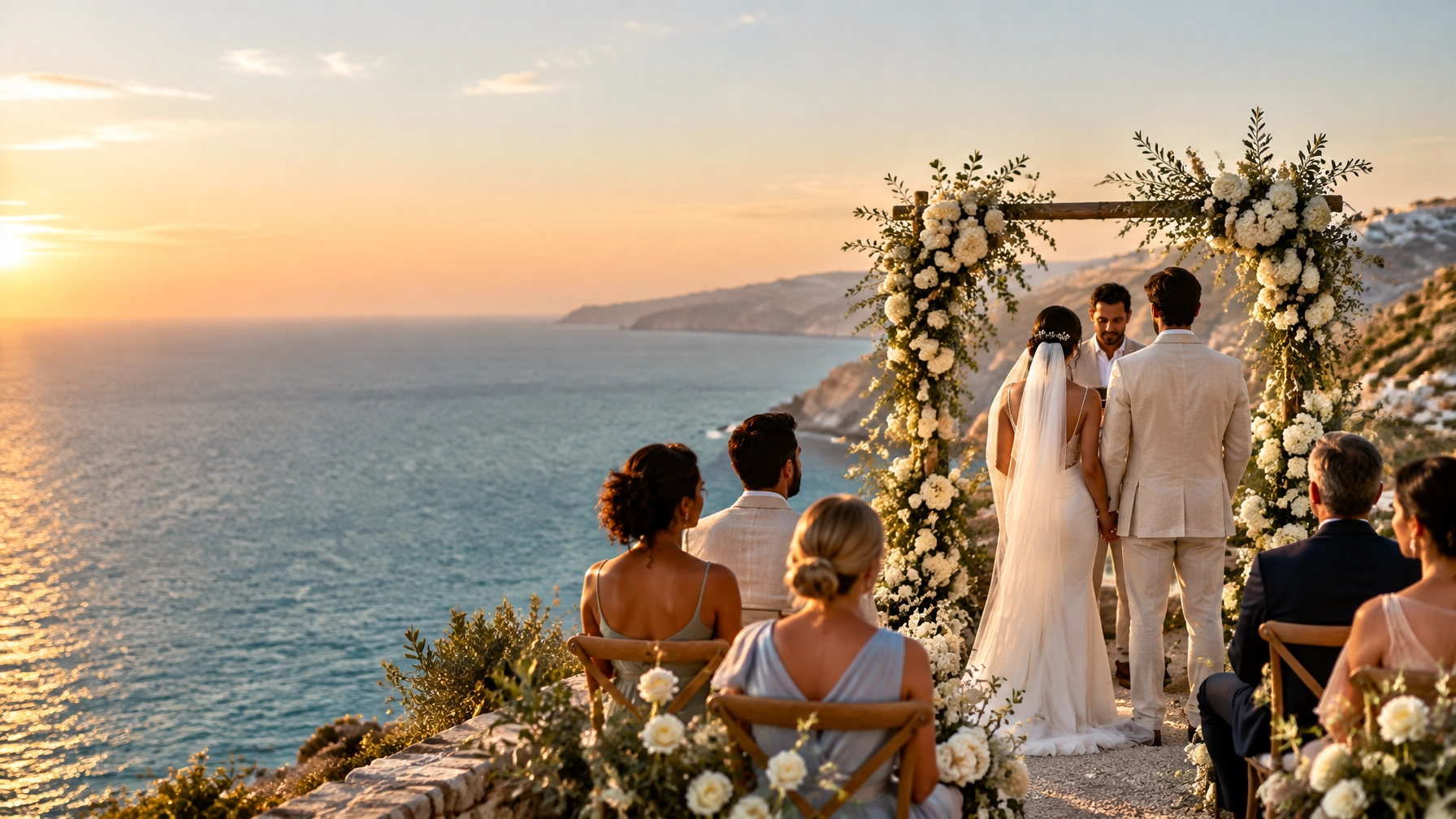
A destination wedding can bring your favorite people together in a memorable setting. It can also ask guests to arrange flights, time off, lodging and transportation, sometimes across different schedules and budgets. The best plans make room for both: the celebration you want and the practical steps your guests need to take part.
Here’s a realistic guide to choosing a location, coordinating guest travel and deciding what kind of planning support may suit your wedding.
Is a destination wedding right for you?
Start with the experience you want to create, then consider what it will ask of your guests. A wedding away from home may mean a smaller guest list, since not everyone can travel. Think about who you most hope will attend, whether the destination is accessible for them, and how much travel time and planning the trip may require.
Consider the overall cost from more than one perspective. Your wedding expenses may include the ceremony and reception, lodging, travel, vendor services and events around the wedding day. Guests will have their own transportation, accommodation and time-off costs. The trade-offs depend on your plans and the destination; don’t assume a resort package covers every wedding or travel expense.
Before committing, discuss the likely guest count and travel expectations with the people whose attendance matters most. Then make those expectations clear in your early communications, while giving guests time to decide whether the trip works for them.
Which destination wedding location type fits your plans?

Different location types create different travel and planning questions:
For any location, compare airport access, travel time, accommodation choices, accessibility needs and the season you’re considering. Check current travel and entry requirements with official sources, and confirm wedding rules with the destination’s relevant authorities or your wedding provider.
If the Caribbean is on your shortlist, explore our Caribbean honeymoon guide for ideas to consider for your trip after the celebration.
- Caribbean or Mexico beach resorts: A resort setting may bring lodging, dining and ceremony options together in one location. Ask what a wedding package includes, what is optional, and what guests need to arrange separately.
- Europe: A European wedding may involve more variation in local transportation, language, vendor coordination and legal requirements. Consider how guests will reach the ceremony location and whether they will need extra time to travel between places.
- Cruise weddings: A ship-based celebration involves a set sailing schedule and specific rules from the cruise line. Ask where and when ceremonies can take place, what happens if guests travel on a different schedule, and what arrangements are possible in port.
How will you coordinate travel for wedding guests?
Guest logistics can be one of the most underestimated parts of a destination wedding. Guests may book different flights, arrive on different days, choose different room types or need help understanding how to get from the airport to their accommodation.
A few clear steps can make the process easier:
A travel advisor can help coordinate guests’ travel options and handle booking questions, subject to supplier availability and booking terms. Depending on the destination and arrangements, group options or rates may be available, but they should always be confirmed rather than assumed. The goal is to help the couple focus on the wedding instead of becoming the group’s travel help desk.
- Share the essentials early. Once your destination and approximate dates are settled, send a travel notice with the location, expected schedule and a way to get updates.
- Explain accommodation options. If you’re arranging a room block, clarify how to book, any deadlines and the terms guests should review. Confirm the block details with the property before sharing them.
- Keep trip details in one place. Gather travel dates, airport information, accommodation guidance, event locations, dress expectations and key contacts in a simple information hub.
- Plan for different arrival times. Avoid assuming everyone will arrive together or use the same transportation. Give guests clear instructions for their own arrival plans.
- Name a contact for travel questions. When possible, direct booking and itinerary questions to a designated travel contact rather than asking the couple to manage every reservation detail.
When should you start destination wedding planning?
Start early enough to make decisions that affect both the wedding and the trip. As a general planning window, consider beginning roughly a year or more ahead, especially if guests need substantial notice, you’re considering a less accessible location, or the celebration involves multiple events. The right lead time depends on the destination, suppliers and your plans.
What should you decide first?
Begin with your guest-list range, preferred location type, possible dates and overall budget. Then investigate travel access, accommodation options, the legal process and the venue’s booking terms. Confirming these basics can help you avoid building detailed plans around a date or location that won’t work for your group.
What should you confirm as the date gets closer?
Review guest bookings and accommodation arrangements, collect arrival information where appropriate, and confirm the event schedule with your venue or planner. Recheck transportation plans, accessibility needs, final guest counts and any local requirements. Keep a current itinerary and share updates promptly when details change.
For legal requirements, check guidance from the destination’s official authorities. The U.S. Department of State explains that marriage requirements vary by country and recommends checking the applicable rules before travel: Marriage abroad: U.S. Department of State.
Should you work with a resort wedding team or an independent planner?
A resort wedding team may be a natural first contact for celebrations held on that property. Ask which parts of the wedding they coordinate, which decisions are yours, and what is handled by other departments or outside vendors.
An independent planner may be helpful if you want support beyond the property’s own arrangements, for example, with multiple events, custom details, off-site plans or broader coordination. Couples may also choose to work with both: the resort team for property-specific details and an independent planner for a wider view of the event.
Before choosing, ask each provider who will manage timelines, vendor communication, guest questions, event-day decisions and changes. Get the scope of services and responsibilities in writing so you know who to contact for each issue.
Curry Travel Co. offers event planning services, including support with event coordination and guest travel. The right level of help depends on your needs and the details of your event.
How can a travel planner help with guest logistics?

Wedding planning and guest travel are connected, but they are not the same task. A travel planner can help guests understand booking options, coordinate their reservations and direct travel questions to the appropriate contact. This can be especially useful when guests are traveling from different places or need different arrangements.
That support can also help you keep the wedding information organized: who has travel questions, which details are confirmed and what guests still need to know. No travel plan can remove every change or uncertainty, so confirm current availability, terms and arrangements before guests make decisions.
What should you plan for on guests’ arrival day?

Airport transportation deserves its own place on the checklist. Guests may arrive on separate flights or at different times, and some may need help with luggage, mobility or navigating an unfamiliar location.
If pre-arranged ground transportation is suitable, gather the information needed to plan it: arrival dates, flight details, passenger counts, luggage and any accessibility needs. Make sure guests know where to go, how their arrangements will be confirmed and who to contact if their plans change. Transportation options and availability must be confirmed for the specific trip.
For Nashville-area wedding transportation, Curry Travel Co. can help coordinate arrangements through a network of vetted chauffeur partners. See our Nashville wedding transportation page for details.
How can you take the next step?
Destination wedding planning is easier to manage when the celebration and the guest journey are planned together. Start with your location, dates and likely guest count, then decide which parts you want to coordinate yourself and where professional support would be useful.
Tell Curry Travel Co. what you’re planning through our event inquiry or trip inquiry, or schedule a call with Emily to talk through your plans.
ARTICLE 7 OF 7
Keep planning with a focused checklist
Use this guide to compare your options, then follow the companion checklist for the next planning steps.